
Can I Run a Half Marathon if I Can Run 10K?
If you can comfortably run a 10K, you’re already more than halfway to finishing a half marathon. Seriously - that 6.2-mile distance you’ve been crushing? A half marathon is just 13.1 miles. It’s not a giant leap. It’s a smart step forward. But jumping straight from 10K to half marathon without a plan? That’s asking for burnout, injury, or a painful finish line crawl. Let’s cut through the noise and give you the real, no-fluff roadmap.
What’s the real gap between 10K and half marathon?
Running a 10K means your body can handle about 40-50 minutes of sustained effort. A half marathon? That’s 90 to 120 minutes of continuous running, depending on your pace. The difference isn’t just distance - it’s endurance, fueling, mental stamina, and muscle resilience. You’re not doubling the effort. You’re adding layers of complexity your body hasn’t been trained for yet.
Think of it like this: if you’ve been driving a compact car on city streets, a half marathon is like taking that same car on a 12-hour highway road trip. The engine’s the same, but now you need to check the oil, pack snacks, plan rest stops, and keep your focus sharp for hours. Your body needs the same prep.
Can you do it? Yes - if you train right
Here’s the truth: most people who can run a 10K can run a half marathon in 12 to 16 weeks with a smart plan. No magic. No extreme mileage. Just consistency. The key isn’t running farther every day. It’s running smarter.
A typical training plan for a 10K runner moving to a half marathon looks like this:
- Run 3-4 days per week
- One long run each week - start at 6 miles, build up to 10-11 miles
- One easy recovery run
- One speed or tempo session (like 4 x 800m at 10K pace)
- Optional: one cross-training day (cycling, swimming, or strength)
That’s it. No need to run 20 miles a week. No need to run every day. You just need to keep showing up.
The biggest mistake people make
Most runners go from 10K to half marathon by just adding miles. They think, “I ran 6 miles last week, so I’ll run 7 this week, then 8, then 9…” And then, around week 6, they get shin splints, plantar fasciitis, or just feel completely drained. Why? Because they skipped the most important part: long runs.
Your body doesn’t get ready for 13.1 miles by running 5 miles every day. It gets ready by spending time on its feet at a slower pace. Long runs teach your muscles to burn fat, your heart to pump efficiently, and your mind to push through discomfort. They’re not about speed. They’re about time on your feet.
Start your long run at 6 miles. Run it at a pace where you could still hold a conversation. No racing. No pushing. Just steady, relaxed movement. Increase by no more than 1 mile per week. Hit 10 miles three weeks before race day. That’s your peak. Then taper. Easy.
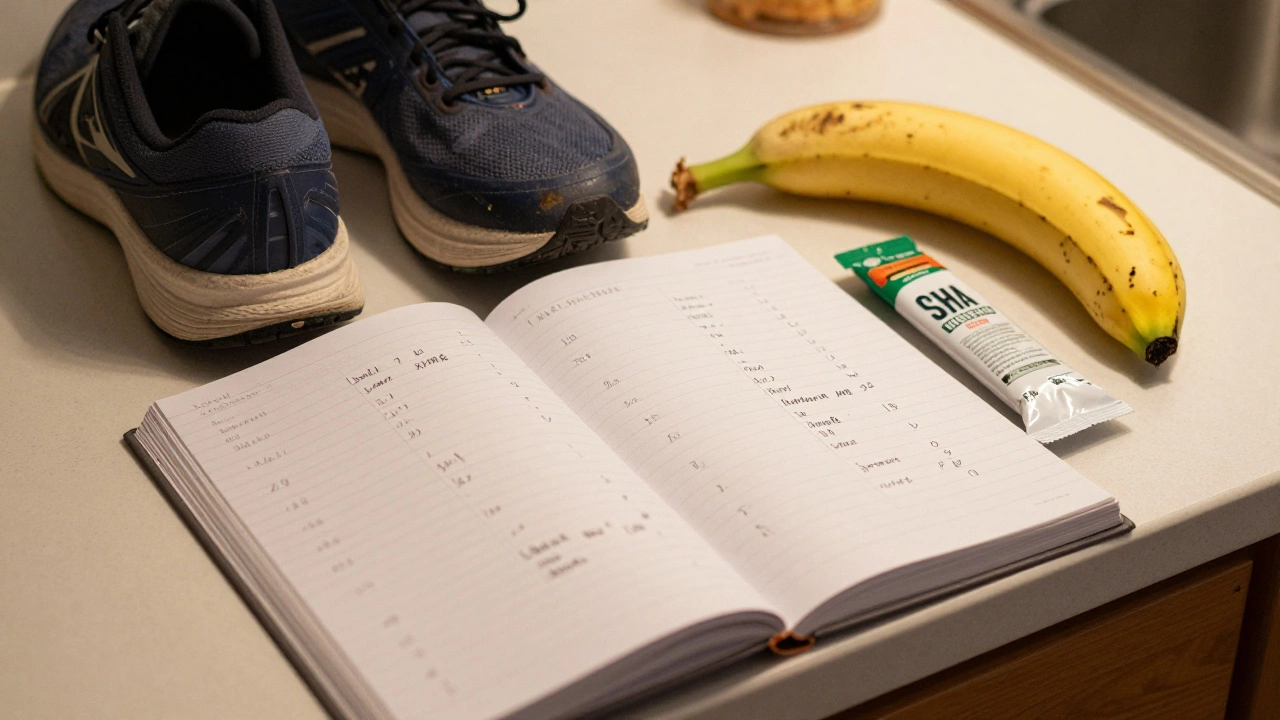
Fueling: It’s not just about water
If you’ve only ever run 10K, you probably didn’t need to eat during the run. For a half marathon? You’ll need fuel. Around the 6-mile mark, your glycogen stores start to dip. If you don’t replace them, you hit the wall - that sudden, crushing fatigue.
Practice this during your long runs: take a gel or a few dates or a handful of raisins every 45-60 minutes. Drink water every 20-30 minutes. Don’t wait until you’re thirsty. Don’t wait until you feel weak. Train your gut like you train your legs.
Test your fuel during training. If a gel gives you stomach cramps, try something else. Some runners do well with bananas, others with electrolyte tablets. Find what works for you - and stick with it on race day.
Shoes matter more than you think
You’ve probably been running your 10K in the same pair of shoes for months. That’s fine - if they still have cushion and support. But if they’ve got 300+ miles on them? You’re running on bricks.
Replace your shoes before you start training for the half marathon. Look for a pair designed for endurance, not speed. A neutral, well-cushioned shoe will protect your joints over longer distances. Don’t buy new shoes the week before the race. Break them in with at least 3-4 easy runs first.
Recovery isn’t optional
Running a half marathon isn’t about how hard you push. It’s about how well you recover. Your body rebuilds itself when you rest - not when you’re running. Skip rest days, and you’re asking for overuse injuries.
After your long run, do this:
- Stretch gently for 10 minutes
- Walk around for 5 minutes - don’t sit down right away
- Hydrate with water and a pinch of salt
- Get at least 7 hours of sleep that night
And yes - take at least one full rest day per week. No running. No cycling. No yoga. Just rest. Your body will thank you.

What to expect on race day
On race morning, you’ll feel nervous. That’s normal. You might hit a rough patch around mile 9. That’s also normal. But if you’ve done your long runs, you’ve already been there. You’ve felt tired. You’ve kept going. That’s your proof.
Start slow. Way slower than you think. The first 3 miles should feel easy. Save your energy for the last 3. Most people blow up in the final miles because they started too fast. Don’t be one of them.
And if you need to walk for a minute? Do it. Walk through aid stations. Walk up hills. You’re not failing. You’re adapting. Half marathon finishers come in all shapes, sizes, and paces. The only thing that matters is that you crossed the line.
Real-world example: Sarah from Dublin
Sarah ran her first 10K in 52 minutes last spring. She wanted to do a half marathon by October. She didn’t run more than 3 times a week. She did 6-mile long runs every Sunday. She ate a banana at mile 6 during her training runs. She replaced her shoes after 250 miles. She took one full rest day every week. On race day, she finished in 2:04. Not fast. Not slow. Just done. And she didn’t walk away with an injury.
She didn’t have a coach. She didn’t have a fancy app. She just followed a simple plan - and stuck to it.
Final word: You’re closer than you think
If you can run 10K, you have the foundation. The half marathon isn’t a test of athleticism. It’s a test of patience. Of consistency. Of showing up even when you don’t feel like it. You don’t need to be fast. You don’t need to be elite. You just need to be steady.
Start your training in 12 weeks. Build your long runs. Fuel smart. Rest hard. And when race day comes? You’ll cross that finish line not because you’re the fastest - but because you didn’t quit.
Can I run a half marathon if I’ve never run more than 10K?
Yes - if you train properly. Most people who can run 10K can finish a half marathon in 12 to 16 weeks with a simple plan that includes weekly long runs, one speed session, and enough rest. You don’t need to run every day or hit high mileage. Just be consistent.
How long should I train before a half marathon?
Aim for 12 to 16 weeks. If you’re already running 10K regularly, 12 weeks is doable. If you’re coming back from a break or have never trained before, 16 weeks gives you more room to build safely. The key is gradual progression - increase your long run by no more than 1 mile per week.
Do I need to run 13 miles in training?
No. Most training plans cap your longest run at 10-11 miles. Your body doesn’t need to run the full distance in training to handle it on race day. The goal of long runs is to build endurance and mental toughness - not to replicate race day. Running too far before race day increases injury risk and leaves you drained.
What should I eat before and during the race?
Eat a light, carb-based meal 2-3 hours before the race - think toast with honey or oatmeal. During the race, take a gel, banana, or energy chew every 45-60 minutes starting around mile 6. Practice this in training so your stomach doesn’t rebel. Hydrate with water or sports drink every 20-30 minutes.
Should I run the entire half marathon or is walking okay?
Walking is completely okay - and smart. Many runners walk through water stations or up hills. Some even use a run-walk strategy (like 5 minutes running, 1 minute walking) from the start. The goal isn’t to run nonstop - it’s to finish. Walking helps you conserve energy and avoid burnout. There’s no shame in it.
How do I avoid injury while training?
Three things: don’t increase mileage too fast (no more than 10% per week), replace your shoes every 300-500 miles, and take at least one full rest day per week. Listen to your body. If something hurts beyond normal muscle soreness, stop and rest. Stretch, foam roll, and get enough sleep. Recovery is part of training.