What Sports Equipment Can Be Used as a Weapon? A Practical Guide
Sports Gear Improvised Defense Calculator
Select your sport to see which equipment offers the best balance of power (kinetic energy) and convenience (portability/reach).
Effectiveness Score
Analysis: -
You’re walking home late. Your bag is heavy with gear from practice. Suddenly, you hear footsteps behind you that don’t match your pace. You aren’t carrying a knife or pepper spray. But you are carrying something else: sports equipment is any gear used in athletic activities, often made of durable materials like wood, metal, or hard plastic, which can serve dual purposes for play and protection. It’s a weird thought, right? But history and street reality suggest that everyday athletic gear makes surprisingly effective tools when things go wrong.
This isn’t about turning your gym into an armory. It’s about understanding the physics and potential of objects you already own. When we talk about using sports gear defensively, we look at mass, velocity, reach, and durability. Not every ball will stop an attacker, but a steel-shafted golf club certainly will. Let’s break down what works, what doesn’t, and why some items are better than others.
The Physics of Improvised Defense
Why does a tennis racket feel different than a football helmet when you swing them? It comes down to energy transfer. In physics terms, kinetic energy equals half the mass times velocity squared ($KE = \frac{1}{2}mv^2$). If you want an object to hurt (or stop) someone, you need high mass or high speed, preferably both. Sports equipment is designed to withstand impact, meaning it rarely breaks when you hit something hard. That’s crucial. A glass bottle shatters; a baseball bat is a wooden or aluminum club used in baseball, designed to strike a pitched ball with significant force. stays intact after hitting concrete.
Reach matters too. Fighting someone up close is risky. You want distance. Items with long handles give you leverage and keep threats away from your body. This is why bludgeons with handles-like bats or clubs-outperform handheld items like balls or gloves. The handle allows you to generate torque, multiplying the force of your swing.
Blunt Force Instruments: The Heavy Hitters
When people think of sports gear as weapons, they think of bats. And for good reason. The baseball bat is the gold standard of improvised defense. Whether made of ash, maple, or aluminum alloy, these bats are engineered to hit a small, fast-moving target without breaking. An aluminum bat, specifically, offers a larger "sweet spot" and lighter weight, allowing for faster swings compared to traditional wood.
| Item | Material | Weight Range | Effectiveness | Portability |
|---|---|---|---|---|
| Baseball Bat | Wood / Aluminum | 28-34 oz | High | Moderate |
| Cricket Bat | Willow Wood | 2.6-3.0 lbs | Very High | Low |
| Golf Club | Steel / Titanium | 19-21 oz | Medium-High | High |
| Hockey Stick | Composite / Wood | 17-22 oz | Medium | High |
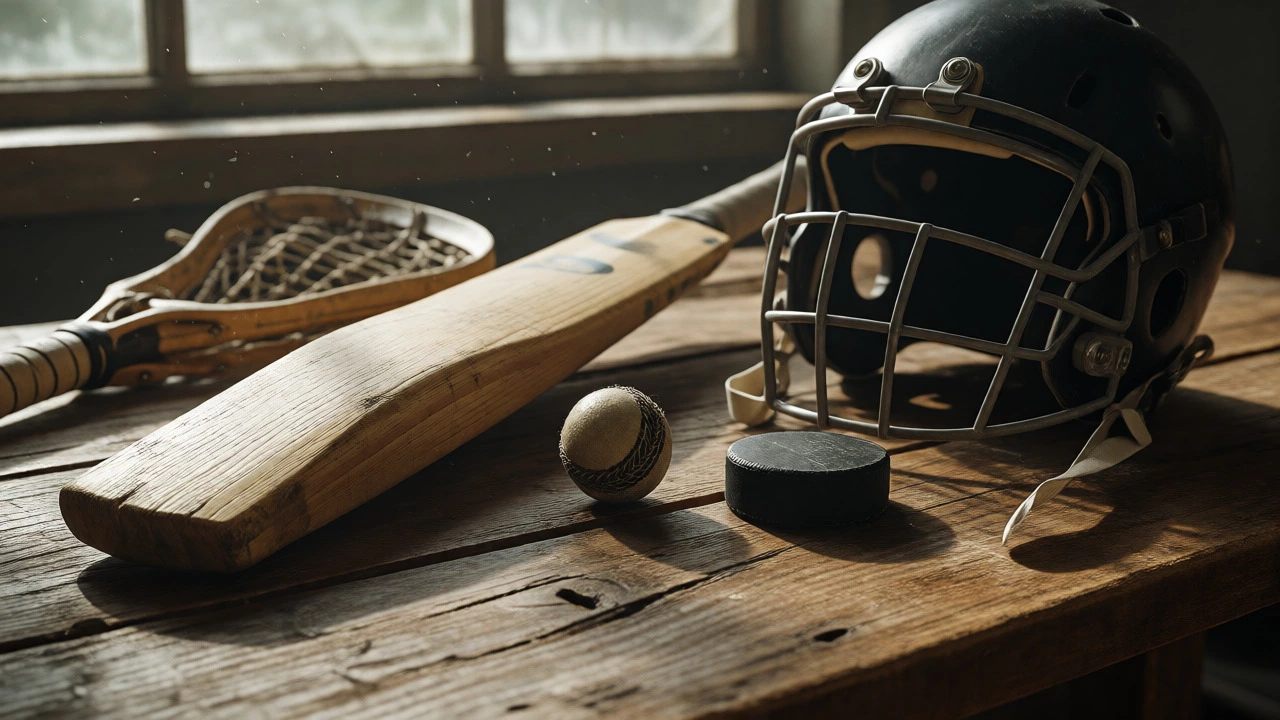
Notice the cricket bat is a flat-faced wooden bat used in cricket, known for its substantial weight and broad striking surface. ranks higher in effectiveness than the baseball bat. Why? Mass. Cricket bats are heavier. They pack more punch per swing. However, they are also bulky and awkward to carry on public transport. A baseball bat fits easily in a backpack or car trunk. It’s a balance between power and convenience.
Golf clubs deserve special mention. While lighter, the head of a driver or iron is dense metal. A precise strike to a vulnerable area (like the knee or shin) with a 9-iron can be devastating due to concentrated force. Plus, most golfers have a full set. You don’t need to buy anything new. Just grab the 7-iron. It’s compact enough to hide under a coat but sturdy enough to deter trouble.
Piercing Threats: Arrows and Darts
Not all sports rely on blunt force. Archery introduces projectile danger. An arrow is essentially a spear in miniature. If you carry a bow case, you likely have arrows. Modern carbon arrows are stiff, sharp, and dangerous. Unlike a bat, an arrow requires skill to use effectively under stress. You can’t just swing it wildly. You need space to draw the string and aim.
However, even without the bow, the arrow itself serves as a piercing tool. The tip, especially if it’s a field point or broadhead, can puncture skin and muscle. For darts players, the risk is lower but real. Steel-tip darts thrown at eye level can cause serious injury. Brass tips are less lethal but still painful. If you’re playing darts in a pub, keep your thrower’s zone clear. Accidents happen, and a stray dart to the forehead is no joke.
Projectile Risks: Balls and Pucks
Can you fight with a soccer ball? Technically, yes. Practically, not really. A standard size 5 soccer ball weighs about 14 ounces. Throwing it at someone might annoy them, but it won’t stop them. The same applies to basketballs and volleyballs. They are large, light, and bouncy. They absorb impact rather than transferring it efficiently.
But consider the baseball is a small, hard ball with a cork center and rubber windings, covered in leather, used in baseball.. It’s dense. A baseball traveling at 90 mph from a pitcher’s hand has immense kinetic energy. If you can throw it accurately at close range, it hits like a rock. It’s smaller, so it’s easier to conceal. A handful of baseballs in a pocket can serve as multiple shots. Once you run out, you’re empty-handed, though.
Hockey pucks are another story. Made of vulcanized rubber, they are incredibly hard and slide low to the ground. A slap shot puck can break bones. Carrying a puck in your pocket gives you a small, dense projectile. It’s not much, but it’s better than nothing if you need to create a distraction or cause minor pain to escape.
Protective Gear as Offensive Tools
We usually think of helmets and pads as defensive. But in a scuffle, they become offensive. A football helmet is a protective headgear worn by American football players, featuring a hard outer shell and internal padding. is a solid object. Swinging it by the facemask turns it into a mace. The hard plastic shell concentrates force onto a small area. It’s heavy, awkward, but brutal.
Shin guards in soccer or hockey are rigid plastic shields. Strapped to your forearm, they act as a makeshift shield against knives or sticks. Conversely, you can jab someone with the edge of a shin guard. It’s not elegant, but it keeps your hands free while offering protection. Boxing gloves, ironically, are poor weapons. They cushion the blow, reducing the sting of your punch. You want bare knuckles or a wrapped fist for maximum damage. Gloves spread the impact over a larger area, making them less effective for inflicting acute pain.
Choosing the Right Item for Your Sport
Not everyone plays baseball. So how do you assess your specific sport? Look for three traits: hardness, density, and handle length.
- Hardness: Does it deform when squeezed? If yes, it’s bad for striking. Tennis balls are useless here. Golf balls are excellent.
- Density: Is it heavy for its size? A lacrosse ball is small but extremely dense. It hurts significantly more than a tennis ball of the same size.
- Handle Length: Longer is generally better for control and reach. Rackets, bats, and clubs win here. Gloves and shoes lose.
If you play tennis, your racket is decent. The frame is rigid graphite or composite. The strings add tension. Swinging a tennis racket can snap bones if you catch someone on the wrist or ankle. It’s lighter than a bat, so you can swing it faster. Speed compensates for lack of mass.
For swimmers, options are limited. Goggles offer little value. Kickboards are bulky foam. Fins are rubbery and flexible. Perhaps the best asset is a swimmer’s lung capacity and ability to hold breath underwater, but that’s a physiological trait, not equipment. If you must pick an item, a weighted pull buoy is dense rubber. It’s small, heavy, and can be thrown or swung.
Legal and Ethical Considerations
Just because you can use a cricket bat as a weapon doesn’t mean you should. Laws vary by region regarding "improvised weapons." In many places, carrying a baseball bat is legal because it’s clearly sporting equipment. Carrying a machete is not. Context matters. If you’re walking near a park with a bat, you’re fine. Walking through a city center with a bat might raise eyebrows.
Proportionality is key. Using a golf club to defend against a shove is excessive. Using it against a deadly threat is reasonable. Always prioritize de-escalation. The goal is to create space to escape, not to win a duel. Most sports injuries occur during play, not combat. Don’t turn your leisure time into a battlefield unless absolutely necessary.
Practical Tips for Everyday Athletes
If you’re worried about safety, consider these adjustments to your routine:
- Keep gear accessible: Don’t bury your bat at the bottom of a duffel bag. Keep it reachable.
- Maintain your equipment: Check for cracks in bats or loose heads on clubs. Broken gear fails when you need it most.
- Know your limits: Swinging a heavy bat requires strength. If you tire quickly, opt for lighter options like golf irons or tennis rackets.
- Practice awareness: Situational awareness beats any weapon. Seeing trouble before it arrives is the best defense.
Remember, the element of surprise is powerful. An attacker expects fists or feet. They don’t expect a lacrosse stick. Use that confusion to your advantage. Aim for limbs, not heads. Breaking a knee stops movement. Cracking a skull is risky and legally complicated.
Is a baseball bat considered a deadly weapon?
In many jurisdictions, a baseball bat is classified as a sporting good, not a weapon, when carried in a normal context. However, if used aggressively in an altercation, it can be legally deemed a deadly weapon because of its potential to cause fatal injury. Intent and context determine the legal classification.
Which sports ball is the most dangerous if thrown?
A baseball or a cricket ball is typically the most dangerous due to their high density and hard surfaces. A baseball thrown at high velocity carries significant kinetic energy and can cause fractures or concussions, unlike softer balls like soccer or volleyball balls.
Can a tennis racket be used for self-defense?
Yes, a tennis racket can be effective. Its rigid frame allows for focused strikes on joints or limbs. It is lighter than a baseball bat, enabling quicker swings, though it delivers less blunt force trauma. The strings can also entangle or scratch if struck correctly.
Are boxing gloves good for fighting?
Generally, no. Boxing gloves are designed to protect the wearer's hands and reduce impact on the opponent. They distribute force over a larger area, which reduces the sting of a punch compared to bare knuckles. For self-defense, bare hands or wrapped fists are often more effective for causing immediate pain.
What is the most portable sports weapon?
A golf club, specifically an iron, is highly portable. It is slim, easy to carry in a bag or car, and made of dense metal. A lacrosse ball is another highly portable option, fitting in a pocket while retaining significant density and hardness for throwing or striking.