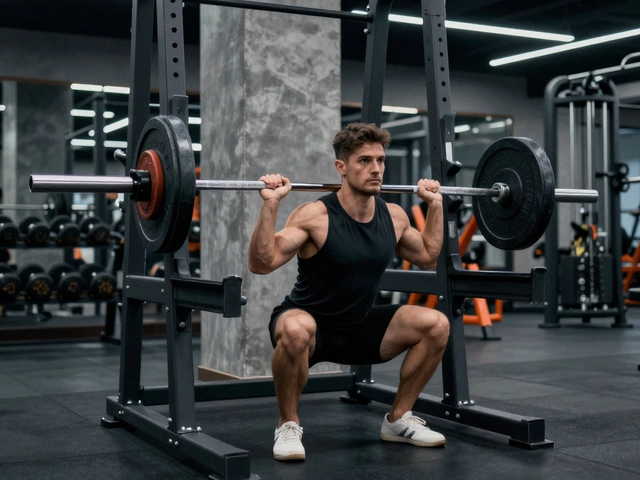
How to Start a Gym Routine: A Simple Guide for Beginners
Beginner Gym Routine Calculator
Your Gym Routine Planner
Start small and build consistency. This calculator helps you create a sustainable workout plan based on your schedule and energy level.
Starting a gym routine feels overwhelming when you’ve never done it before. You walk in, see people lifting heavy weights, running on treadmills, and doing exercises you don’t recognize. You wonder if you’re too out of shape, too slow, or just not cut out for it. The truth? Everyone started where you are now. You don’t need to be strong, fast, or fit to begin. You just need to show up.
Start with why
Before you even step into the gym, ask yourself why you want to start. Is it to feel more energy during the day? To stop feeling out of breath walking up stairs? To be healthier for your kids? To sleep better? Your reason doesn’t have to be grand. It just has to be real to you. People who stick with gyms long-term aren’t the ones chasing six-pack abs. They’re the ones who started because they wanted to feel better in their own skin.Write your reason down. Put it on your phone wallpaper. Say it out loud when you’re tempted to skip a workout. This isn’t fluff. It’s the anchor that keeps you going when motivation fades.
Start small - really small
Most people fail because they try to do too much too soon. They sign up for a 60-minute workout five days a week and burn out by week two. That’s not a plan. That’s a punishment.Here’s what actually works: start with two 20-minute sessions a week. That’s it. You don’t need to lift heavy, run fast, or sweat buckets. Just move. Walk on the treadmill at a comfortable pace. Do 10 bodyweight squats. Do 5 push-ups against a wall. Stretch your shoulders and hips. That’s a full workout.
Why 20 minutes? Because it’s short enough that you can’t talk yourself out of it. Why two days? Because it’s enough to build a habit without burning you out. After two weeks, you’ll start looking forward to it. That’s when you add a third day.
Learn the basics - no fancy gear needed
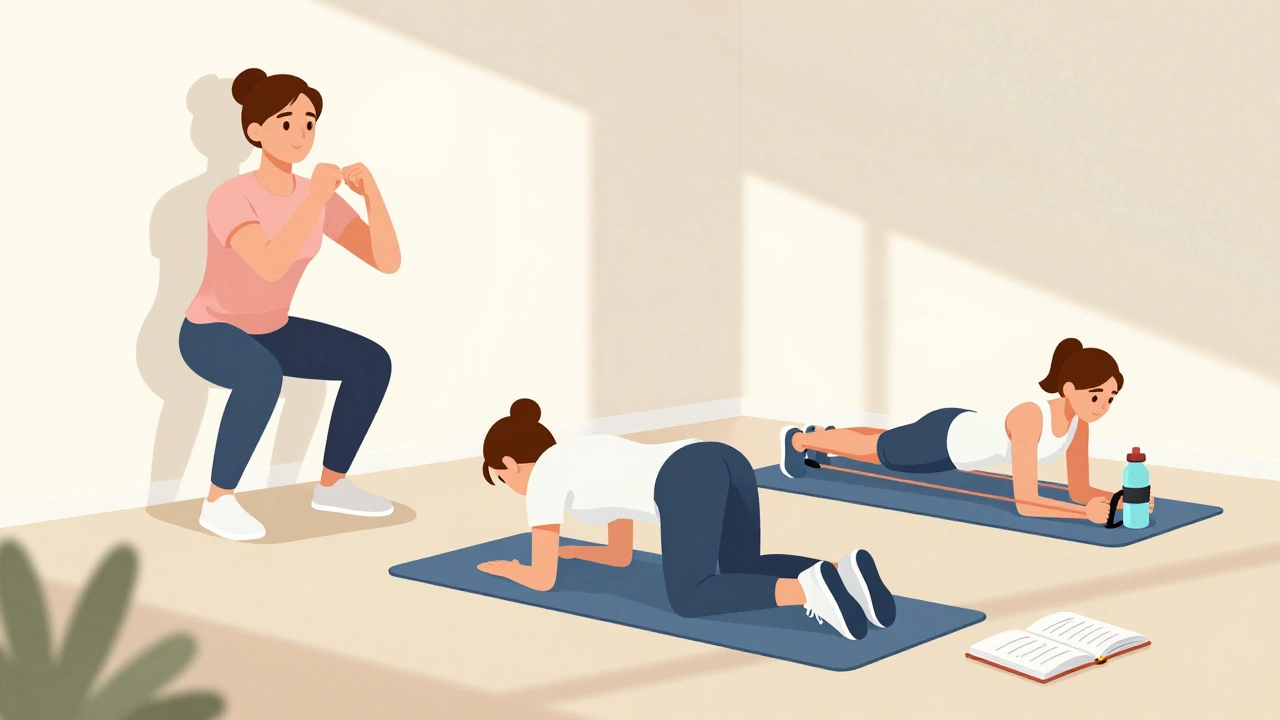
You don’t need to know how to do a deadlift or a bench press on day one. Focus on three movements that work your whole body:- Squats - stand with feet shoulder-width apart, lower your hips back and down like you’re sitting in a chair, then stand up. Keep your chest up.
- Push-ups - start on your knees if needed. Keep your body straight from head to knees, lower your chest toward the floor, then push back up.
- Rows - use a resistance band or dumbbell. Pull the weight toward your hip, squeezing your shoulder blades together.
Do two sets of 8-12 reps for each. That’s it. You can do these with no equipment at first. Use water bottles. Use a backpack filled with books. The goal isn’t to lift heavy. It’s to learn how your body moves.
Watch YouTube videos from certified trainers like Jeff Nippard a certified personal trainer and exercise scientist who explains fitness in simple, evidence-based terms or Jeremy Ethier a fitness educator known for clear, practical coaching for beginners. Don’t follow influencers who sell supplements. Follow people who teach movement.
Don’t skip the warm-up and cool-down
You don’t need to spend 15 minutes on a stationary bike before lifting. Just move your body for 5 minutes. Do arm circles, leg swings, and walk in place. Get your heart rate up a little. Loosen your joints.After your workout, spend 5 minutes stretching. Hold each stretch for 20-30 seconds. Focus on your chest, shoulders, hips, and hamstrings. You’ll feel less sore. You’ll move better next time. And you’ll avoid injuries that could set you back for weeks.
Track your progress - not your weight
The scale doesn’t care if you’re getting stronger, more energetic, or sleeping better. It only cares about pounds. And that’s not what matters.Instead, track these three things:
- How many reps you can do - last week you did 8 push-ups. This week you did 10. That’s progress.
- How you feel - do you have more energy? Can you climb stairs without stopping? Did you sleep through the night?
- How your clothes fit - if your pants feel looser, that’s a win.
Keep a notebook or use a free app like Google Keep. Write down what you did each session. No need to be fancy. Just notes. You’ll look back in a month and be surprised.
Consistency beats intensity
You don’t need to crush it every time. You just need to show up. Miss a workout? No big deal. Don’t skip the next one to "make up" for it. Just go back to your plan.One study from the British Journal of Sports Medicine a peer-reviewed journal that publishes research on physical activity and health found that people who worked out just twice a week for 12 weeks improved their strength by 25% - even if each session was only 20 minutes. You don’t need hours. You need regularity.
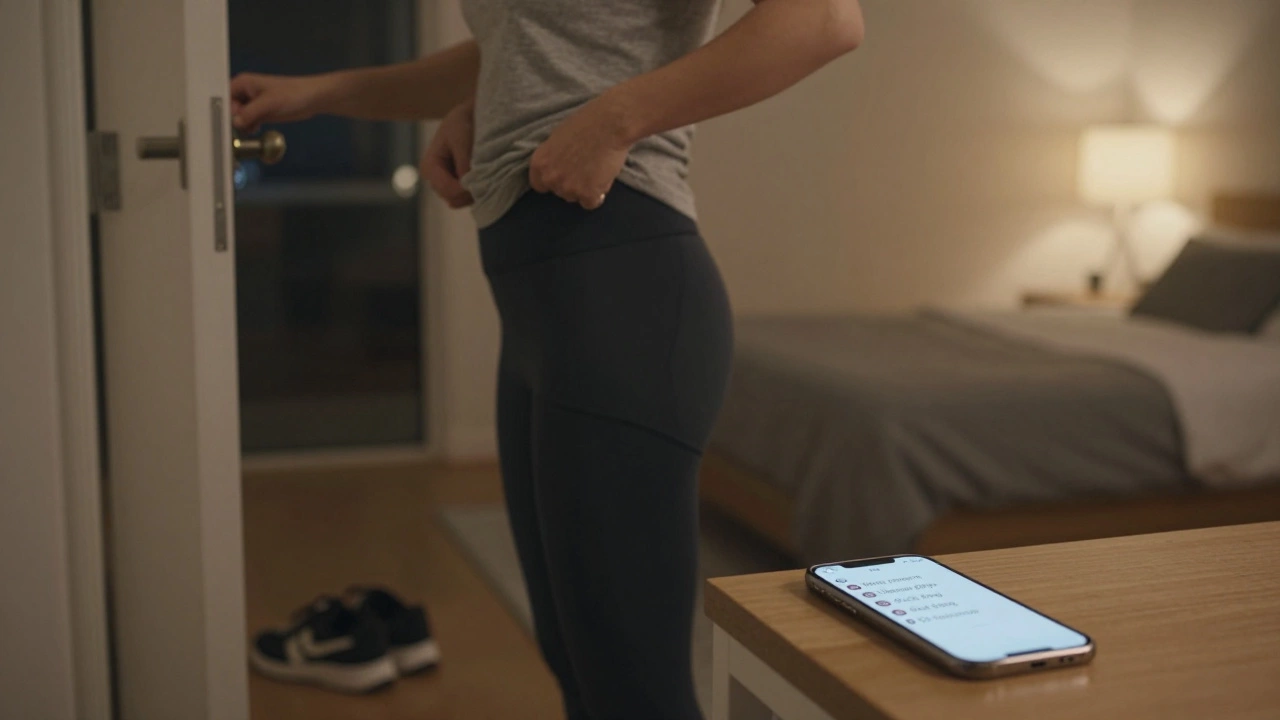
Set a reminder on your phone. Put your gym bag by the door. Tie your workout to something you already do - like right after your morning coffee or right after dinner. Habit stacking works.
What to avoid
There are three traps beginners fall into:- Comparing yourself to others - the guy lifting 200 pounds? He’s been at it for years. You’re just starting. Your journey is yours.
- Waiting for motivation - motivation comes after you start, not before. Don’t wait to feel ready. Just do it.
- Going too hard too fast - soreness is normal. Sharp pain isn’t. If your knee or shoulder hurts during a movement, stop. Adjust. Ask a trainer for help.
When to add more
After four weeks, if you’re feeling confident and not sore all the time, you can add one more day. Maybe a 30-minute walk on the weekend. Or try a light cardio machine like the elliptical for 10 minutes after your strength session.Don’t rush. Don’t try to do everything at once. Build slowly. Your body needs time to adapt. Your mind needs time to believe this is part of your life now.
You’re not behind
You might think you started late. Maybe you’re 30, 40, or 50. Maybe you’ve been out of shape for years. That doesn’t matter. The gym doesn’t care how old you are. It only cares that you showed up.People in their 60s and 70s are building muscle, reversing joint pain, and regaining independence through gym routines. You’re not behind. You’re right on time.
Start small. Stay consistent. Don’t compare. Keep moving. That’s all it takes. In six months, you won’t recognize the person you were when you started. And you’ll be glad you didn’t wait.
Can I start a gym routine if I’m out of shape?
Yes. In fact, that’s exactly when you should start. Gyms have equipment and trainers designed for beginners. Start with bodyweight exercises, light weights, and short sessions. Progress comes from consistency, not how fit you are today.
How often should I go to the gym as a beginner?
Two to three times a week is perfect for beginners. Each session should be 20-30 minutes. Focus on learning movement patterns, not lifting heavy. After a month, you can add a fourth day if you feel ready.
Do I need a personal trainer?
Not necessarily. Many gyms offer a free orientation with a staff trainer to show you the equipment. Use that. Watch free videos from certified coaches. But if you’re unsure about form or have an injury, a trainer for a few sessions can save you from long-term setbacks.
What should I eat before or after the gym?
For beginners, nutrition matters less than consistency. Eat a small snack with carbs and protein 30-60 minutes before - like a banana with peanut butter. After, have a meal with protein and veggies within two hours. But don’t stress. Just make sure you’re eating enough to feel energized.
How long until I see results?
You’ll feel stronger and more energized in 2-4 weeks. Changes in muscle tone or body composition usually show up after 8-12 weeks of consistent effort. Results come from daily habits, not quick fixes.
Next steps
If you’re reading this and thinking, "I’ll start tomorrow," here’s your action plan:- Write down your reason for starting - one sentence.
- Choose two days this week for your first workouts.
- Plan your first 20-minute session: 5 minutes warm-up, 10 minutes of squats, push-ups, and rows, 5 minutes stretching.
- Put your gym clothes in your bag tonight.
- Go tomorrow.
You don’t need permission. You don’t need to be perfect. You just need to begin.