Why Don't Marathon Runners Have Big Legs? The Science of Endurance Physiology
Marathon Runner Physiology Calculator
Understand why marathon runners have lean legs by calculating how your body would adapt to endurance training. This tool estimates changes in body composition, energy costs, and nutritional needs based on the science of Type I vs Type II muscle fibers.
Projected Body Composition Changes
Energy Expenditure Analysis
Daily Nutritional Requirements
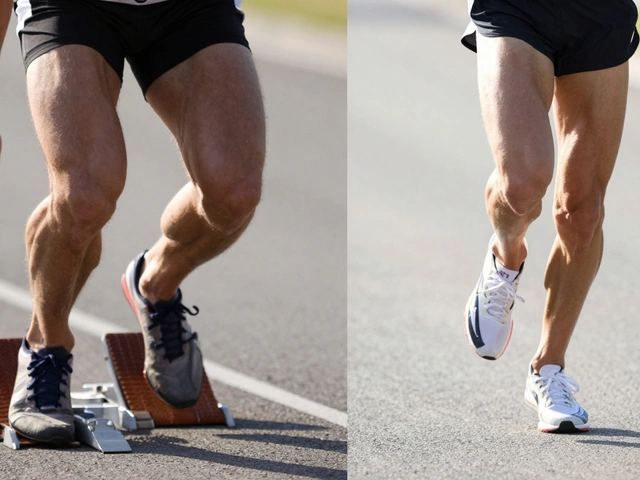
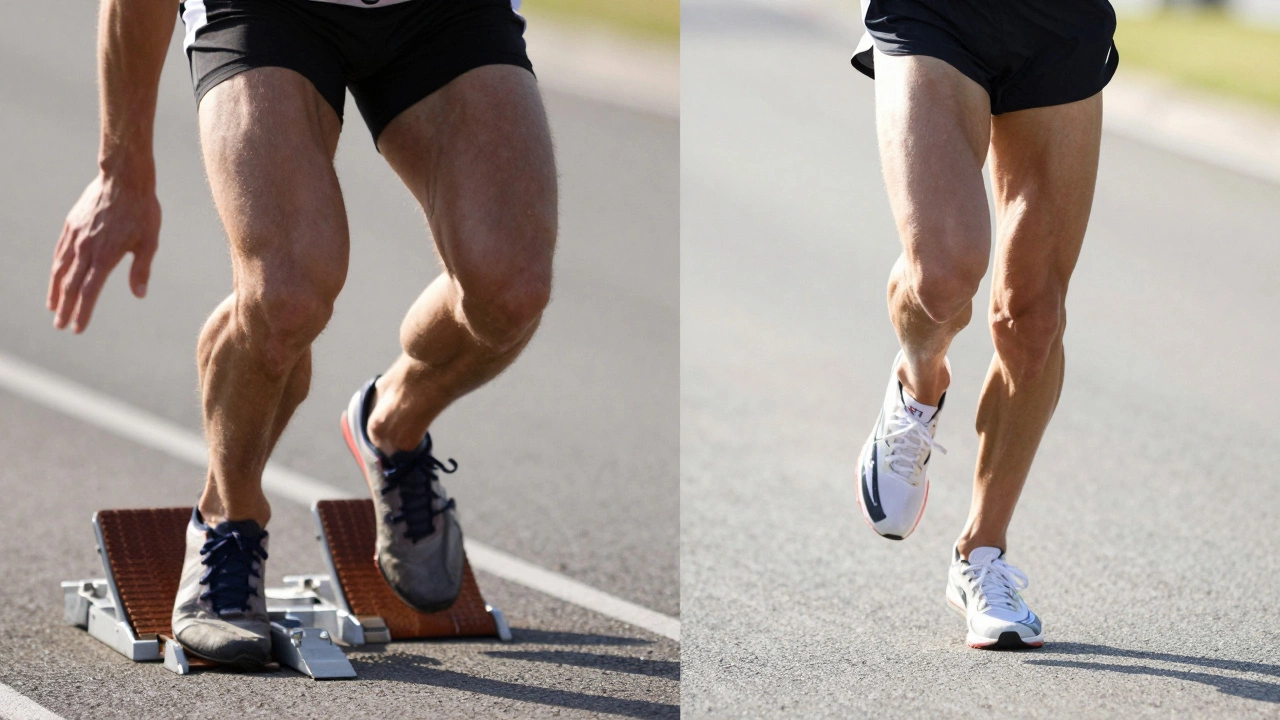
Look at a sprinter like Usain Bolt or a powerlifter. Their legs are thick, dense, and visually imposing. Now look at an elite marathoner like Eliud Kipchoge or Paula Radcliffe. They look almost fragile by comparison. Their calves are slender, their quads lean, and there is very little bulk to be seen. It creates a striking visual contrast that confuses many new runners. You might think, "If they run 26.2 miles every day, surely their muscles must grow huge from the work." But biology doesn't work on logic; it works on efficiency.
The reason marathon runners don't have big legs isn't because they lack strength. It's because their bodies are engineered for a completely different purpose than short bursts of speed. This article breaks down the biological, mechanical, and training reasons why endurance athletes stay lean-legged, and what this means if you are training for your first marathon.
Do marathon runners have weak legs?
No. While they lack size, their legs are incredibly strong relative to their body weight. They possess high muscular endurance and efficient force production, allowing them to sustain movement for hours without fatigue.
The Muscle Fiber Difference: Type I vs. Type II
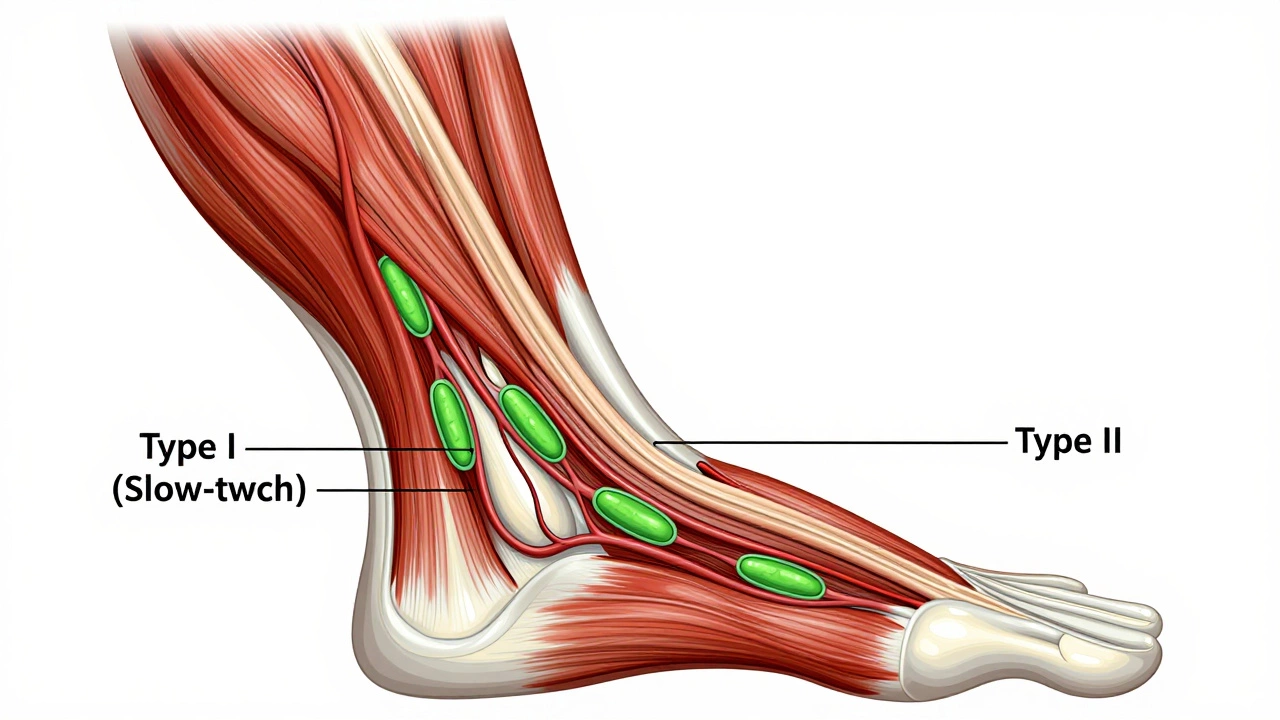
To understand leg size, you first need to understand muscle fibers. Human skeletal muscle is made up of two primary types: Type I (slow-twitch) and Type II (fast-twitch). These fibers behave differently, look different, and respond to training in opposite ways.
Type I fibers are slow-twitch muscle fibers designed for endurance activities like long-distance running. They are small in diameter, rich in mitochondria (the energy powerhouses of the cell), and packed with myoglobin, which gives them a dark red color. Because they rely on oxygen to burn fat and carbohydrates for fuel, they can fire repeatedly for hours without tiring. However, they do not generate massive amounts of force, nor do they grow large in size when trained.
In contrast, Type II fibers are fast-twitch muscle fibers used for explosive movements like sprinting and jumping. They are larger in diameter, generate more power, but fatigue quickly. When you lift heavy weights or sprint, you recruit these fibers. Over time, the stress causes micro-tears in the muscle tissue. As the body repairs these tears, it adds extra protein filaments, making the fiber thicker. This process is called hypertrophy, and it is what creates "big legs."
Marathon runners naturally select for Type I fibers. Through years of long-distance running, their bodies adapt by increasing the density of mitochondria and capillaries within these slow-twitch fibers. They become more efficient at using oxygen, but they do not increase in cross-sectional area. In fact, some studies suggest that chronic endurance training can actually lead to a slight decrease in Type II fiber size as the body sheds unnecessary weight to improve running economy.
The Energy Cost of Carrying Mass
Physics plays a huge role here. Running is essentially a series of controlled falls where you propel yourself forward against gravity. Every pound of muscle mass you carry costs energy to move. For a sprinter, carrying extra mass is acceptable because the race lasts only 10 seconds. The trade-off is worth it for the extra power.
For a marathoner, however, that same mass is a liability. Imagine trying to run 26.2 miles while wearing a weighted vest. That is effectively what bulky muscles would feel like over such a long distance. The human body is remarkably adaptive. If you consistently train for endurance, your body recognizes that excess muscle mass is inefficient. It begins to break down non-essential muscle tissue to conserve energy. This is part of why marathoners often lose weight during heavy training blocks, even if their diet remains unchanged.
This phenomenon is known as the "endurance paradox." You are putting in immense effort, yet your muscles shrink rather than grow. This happens because the stimulus for growth (high tension, low reps) is absent. Instead, the stimulus for efficiency (low tension, high reps, aerobic metabolism) dominates. The body optimizes for leanness, not bulk.
Hormonal Responses to Training
Your hormones dictate whether you build muscle or burn it. Two key players here are testosterone and cortisol. Testosterone is anabolic, meaning it helps build muscle tissue. Cortisol is catabolic, meaning it breaks down tissue.
High-intensity interval training (HIIT) and heavy resistance training spike testosterone levels temporarily, creating an environment conducive to muscle growth. Long-distance running, on the other hand, elevates cortisol levels significantly. During a long run, your body releases cortisol to mobilize stored energy (glucose and fats) into the bloodstream. Prolonged elevation of cortisol can inhibit muscle protein synthesis, making it harder to build size.
Additionally, endurance training increases the sensitivity of insulin receptors in muscle cells. While this sounds good, it means your muscles become better at storing glycogen (energy) rather than building structural protein. Your legs become fuel tanks, not engines. They are optimized to hold energy for the long haul, not to exert maximum force.
Genetics and Self-Selection
It is also important to consider genetics. Not everyone who starts running becomes a marathoner. People with a natural predisposition for bulkier muscles (higher percentage of Type II fibers) often find long-distance running painful or unenjoyable. They may struggle with joint pain, slower recovery times, and lower performance metrics compared to their leaner peers.
Over time, a self-selection process occurs. Those who thrive in marathons tend to be individuals who were already leaner and had a higher proportion of slow-twitch fibers. Elite marathoners are genetic outliers. They have bodies that naturally resist hypertrophy and excel at aerobic efficiency. So, when you look at the top runners in the world, you are seeing the result of both intense training and favorable genetics.
Does This Mean You Can't Build Muscle and Run?
If you are a recreational runner worried about losing your gains, don't panic. The extreme adaptations seen in elite marathoners take years of specialized training. Most amateur runners can maintain reasonable muscle mass if they balance their routine correctly.
To prevent excessive muscle loss while training for a marathon, consider these strategies:
- Strength Train: Incorporate 2-3 sessions of resistance training per week. Focus on compound movements like squats, deadlifts, and lunges. This provides the necessary stimulus for muscle maintenance.
- Prioritize Protein: Ensure you are consuming enough protein (aim for 1.2-1.7 grams per kilogram of body weight) to support muscle repair.
- Avoid Overtraining: Balance your long runs with rest days. Excessive mileage without adequate recovery will accelerate muscle breakdown.
- Monitor Intensity: Keep most of your runs at a conversational pace. Only occasionally push into high-intensity zones to preserve muscle fiber diversity.
Remember, having "big legs" is not a requirement for being a fast runner. In fact, for most people, becoming lighter and more efficient leads to faster times. The goal should be functional strength, not aesthetic bulk.

The Role of Body Fat Percentage
Another factor contributing to the appearance of slim legs is low body fat. Elite marathoners often have body fat percentages between 5% and 10% for men, and 10% to 15% for women. This low fat layer reveals the underlying muscle structure clearly. Without subcutaneous fat covering the muscles, the legs appear smaller and more defined.
However, this does not mean the muscles themselves are weak. A lean calf muscle is still a powerful muscle. The difference is in the ratio of force to weight. Marathoners maximize this ratio. They produce just enough force to move their light frames forward efficiently. Sprinters, conversely, maximize absolute force, regardless of the weight cost.
Common Misconceptions About Runner's Legs
There are several myths surrounding runner's physique that deserve debunking.
Myth 1: Running makes your legs skinny. Running alone doesn't necessarily shrink legs if you are eating in a calorie surplus and lifting weights. It is the combination of high volume, low intensity, and caloric deficit that leads to leanness.
Myth 2: Big legs make you slower. This is true for marathons but false for sprints. A 100-meter dash winner needs big legs. A 5K runner benefits from moderate muscle mass for power. It is only at distances beyond 10K that leanness becomes the dominant advantage.
Myth 3: You need to stop running to build muscle. You don't. Many triathletes and decathletes manage to build significant muscle mass while maintaining high aerobic capacity. The key is periodization-focusing on strength phases during off-seasons and endurance phases closer to race day.
Practical Takeaways for Your Training
If you are starting a marathon training plan, embrace the changes in your body. You will likely notice your jeans fitting looser around the thighs. This is a sign that your body is adapting to the demands of endurance. It is becoming more efficient, burning fat more effectively, and shedding unnecessary weight.
Focus on how you feel rather than how you look. Pay attention to your heart rate, your breathing, and your ability to recover. These are better indicators of fitness than muscle size. If you want to maintain some muscle tone, add hill repeats or strength training to your weekly schedule. But don't fight the process. Let your body become the machine it wants to be for the distance you love.
Will running make my calves bigger?
For most people, no. Calves are composed largely of slow-twitch fibers adapted for standing and walking. Unless you are doing high-volume plyometrics or sprinting, running typically maintains or slightly reduces calf size due to overall fat loss and muscle efficiency.
Can I build muscle while training for a marathon?
Yes, but it is challenging. You must prioritize protein intake and include dedicated strength training sessions. Be aware that as marathon mileage increases, muscle gain will slow down or plateau due to increased energy expenditure and cortisol levels.
Why do some marathon runners have visible abs?
Visible abs are primarily a result of low body fat percentage. Since marathon training burns a significant number of calories, runners often drop body fat below the threshold where abdominal muscles become visible, provided they have some core muscle development.
Is it bad to have big legs for running?
Not inherently. Strong legs provide stability and injury prevention. However, excessive bulk can reduce running economy in long-distance events. The ideal is functional strength with minimal excess mass.
How long does it take for legs to get leaner from running?
Noticeable changes in leg composition usually occur after 8-12 weeks of consistent endurance training, assuming diet is controlled. Initial changes may be due to water weight and glycogen depletion before actual muscle remodeling occurs.