
Is 3 Sets of 10 Reps Good? The Truth About Muscle Growth and Strength
Training Goal & Rep Range Calculator
Select Your Goal
Choose what you want to achieve with your next training block.
Hypertrophy Protocol
The Gold Standard for GrowthWhy this works:
This range targets muscular hypertrophy by creating metabolic stress and moderate mechanical tension. It is safe for joints while providing enough stimulus to trigger protein synthesis.
Progression Strategy
- ✓ Double Progression: Stay at weight until hitting top of rep range, then increase load.
- ✓ Train each muscle group 2x per week for optimal frequency.
You walk into the gym, pick up a pair of dumbbells, and start counting. One, two, three... ten. You rack the weight, rest for a minute, and do it again. Two more times. That’s the classic 3 sets of 10 reps, often abbreviated as 3x10. It is the bread and butter of bodybuilding culture, the standard advice given to beginners, and the default setting on many commercial gym machines. But does it actually work for you? Or are you leaving gains on the table by sticking to this rigid formula?
The short answer is yes, it is good. But it is not perfect for everything. If your goal is to build aesthetic muscle size, 3x10 is a fantastic starting point. If you want to move heavy weights like an Olympic lifter or run a marathon, it might be holding you back. To get real results, you need to understand what this rep range actually does to your body and when you should break the rules.
Why 3 Sets of 10 Is So Popular
There is a reason this protocol has survived decades of fitness trends. It sits in the "Goldilocks" zone of training. It is not too heavy (like 1-5 reps) and not too light (like 15-20+ reps). This middle ground targets muscular hypertrophy, which is the scientific term for muscle growth.
When you perform 8 to 12 repetitions, you create a specific type of metabolic stress. Your muscles fatigue because they are working hard for a sustained period, but the weight is manageable enough that your joints and central nervous system don't take a beating. This balance makes it safe for beginners who are still learning proper form while providing enough stimulus to trigger protein synthesis in experienced lifters.
Furthermore, 3 sets provide a solid volume baseline. Volume, defined as sets multiplied by reps multiplied by weight, is one of the primary drivers of growth. Three sets allow you to accumulate enough total work to stimulate the muscle without causing excessive systemic fatigue that would prevent you from training other muscle groups effectively.
The Science Behind the Rep Range
To decide if 3x10 is right for you, you have to look at how muscles adapt to different loads. Research consistently shows that muscle growth can occur across a wide spectrum of rep ranges, provided you train close to failure. However, the mechanisms differ slightly.
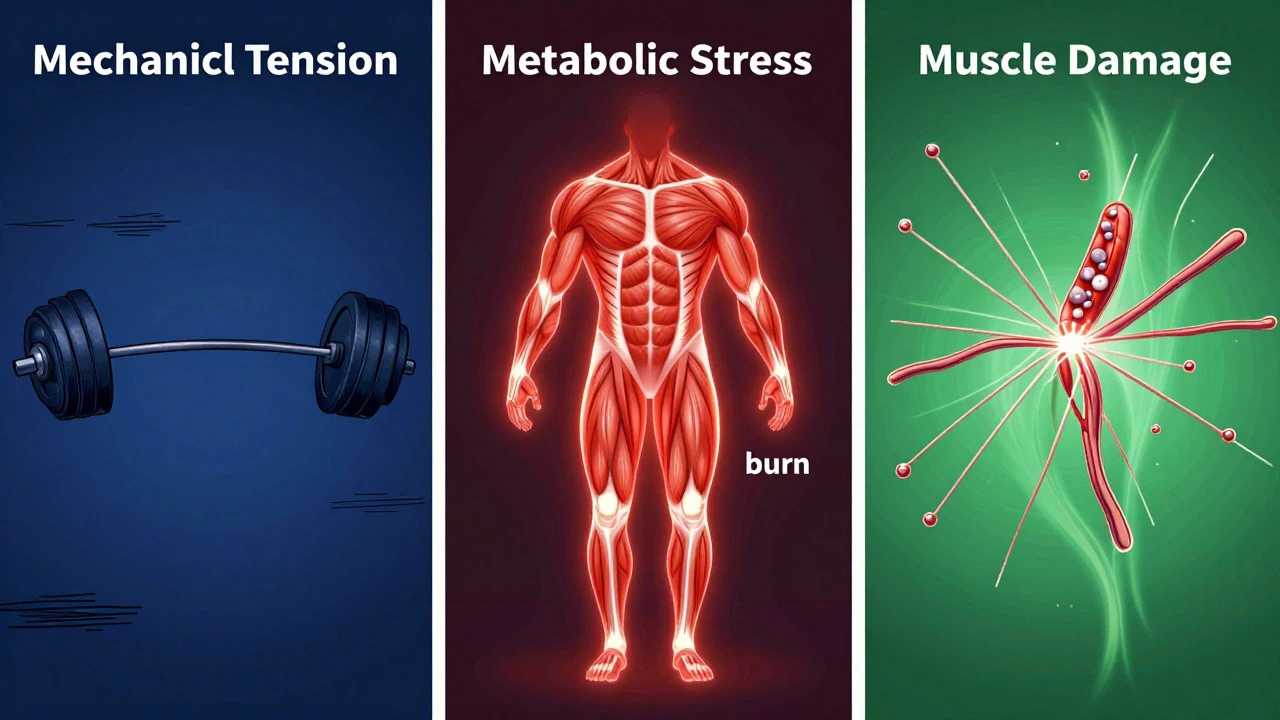
- Mechanical Tension: This is the force placed on muscle fibers. Heavy loads (1-5 reps) maximize this, which is crucial for maximum strength.
- Metabolic Stress: This is the "burn" you feel. Moderate loads (8-12 reps) excel here, increasing cell swelling and hormone release, which signals growth.
- Muscle Damage: Micro-tears in the fibers that repair stronger. This happens in all ranges but is often associated with eccentric movements in moderate rep ranges.
The 3x10 protocol leans heavily into mechanical tension and metabolic stress. It is efficient because it doesn't require the intense neural drive needed for 1-rep max attempts, nor does it require the grueling time-under-tension of high-rep endurance work. For most people walking into a commercial gym in Dublin or anywhere else, this is the most sustainable way to build a physique that looks strong and healthy.
When 3 Sets of 10 Falls Short
Despite its popularity, sticking exclusively to 3x10 is a recipe for plateaus. Your body adapts quickly. If every workout feels the same, your progress will stall. Here is where the classic protocol fails specific goals.
If your primary goal is raw strength-meaning you want to bench press 200kg or squat 300kg-3x10 is insufficient. Strength is a skill. Your nervous system needs to practice moving heavy loads efficiently. You need to spend time in the 1-5 rep range to recruit high-threshold motor units. These are the powerful muscle fibers that only fire under heavy load. If you never lift heavy, these fibers remain dormant, capping your potential strength.
Conversely, if you are training for athletic endurance or conditioning, 3x10 might leave you too sore to perform. Athletes often benefit from higher rep ranges (15-20+) with lighter weights to improve muscular endurance and capillary density without adding significant bulk that could hinder speed or agility.
| Goal | Optimal Rep Range | Sets | Rest Period | Primary Benefit |
|---|---|---|---|---|
| Max Strength | 1-5 reps | 4-6 | 3-5 minutes | Neural adaptation, dense bone/muscle |
| Hypertrophy (Size) | 8-12 reps | 3-4 | 60-90 seconds | Muscle growth, metabolic stress |
| Muscular Endurance | 15-20+ reps | 2-3 | 30-60 seconds | Fatigue resistance, capillary density |
How to Progress Beyond 3x10
The biggest mistake people make with 3x10 is treating the numbers as sacred rather than guidelines. The goal is not to hit 10 reps; the goal is to challenge the muscle. If you can easily complete 12 reps with good form, the weight is too light. If you fail at 7 reps, it is too heavy.
This concept is known as progressive overload. You must gradually increase the demand on your musculoskeletal system. With 3x10, this usually means adding small amounts of weight (2.5kg to 5kg) once you can comfortably complete all three sets of ten. This is called double progression. You stay at a weight until you hit the top of the rep range, then increase the weight and drop back down to the lower end of the range.
However, variety is also key. Consider using undulating periodization. This means varying your intensity within a week. You might do heavy squats (5x5) on Monday, moderate leg presses (3x10) on Wednesday, and high-rep lunges (3x15) on Friday. This hits the muscle from different angles and prevents boredom and overuse injuries.
Common Mistakes to Avoid
Even with the right rep scheme, execution matters. Here are the most common pitfalls that ruin the effectiveness of 3x10 workouts.
- Ego Lifting: Using too much weight and sacrificing form. If your back rounds during a deadlift or your elbows flare excessively during a bench press, you are inviting injury, not growth. Lower the weight and focus on the mind-muscle connection.
- Inadequate Rest: Rushing through rest periods. While shorter rest (60-90 seconds) is fine for isolation exercises like bicep curls, compound movements like squats and deadlifts require longer recovery (2-3 minutes) to ensure you can maintain performance across all sets.
- Ignoring Failure: Stopping far short of failure. If you stop at 10 reps because you feel like it, but you could have done 14, you haven't provided enough stimulus. Aim to finish each set with 1-2 reps left in the tank (RPE 8-9).
- Static Programming: Doing the exact same 3x10 routine for six months. Your body adapts. Change the exercise variation, the tempo, or the rep range every 6-8 weeks to keep making progress.

Tailoring 3x10 to Your Body
Not all muscles respond equally to the same rep ranges. Large muscle groups like legs and back often handle heavier loads better and may benefit from lower rep ranges (6-8) for foundational strength. Smaller muscle groups like shoulders and arms often respond well to higher reps (12-15) because they fatigue faster and are less prone to joint strain from heavy weights.
Consider a hybrid approach. Use 5x5 for your main compound lifts (Squat, Bench, Deadlift) to build a strong base. Then, use 3x10 or even 3x12 for your accessory work (lateral raises, tricep extensions, rows) to carve out detail and size. This gives you the best of both worlds: strength and aesthetics.
Nutrition and Recovery: The Missing Links
You can do perfect 3x10 sets forever, but if you don't eat enough, you won't grow. Muscle tissue is expensive for your body to maintain. It requires energy and building blocks. Ensure you are consuming adequate protein-aim for roughly 1.6 to 2.2 grams per kilogram of body weight daily. Without this, the damage caused by training cannot be repaired into new tissue.
Sleep is equally critical. Most muscle growth happens while you sleep, not while you lift. If you are getting less than 7 hours of quality sleep, your testosterone levels drop, and cortisol (stress hormone) rises, creating a catabolic environment that eats away at muscle gains. Treat your sleep schedule with the same respect as your workout schedule.
Conclusion: Make It Work For You
So, is 3 sets of 10 good? Yes, it is an excellent, proven method for building muscle mass and general fitness. It is safe, effective, and easy to program. But do not worship it. Use it as a tool in your toolbox, not the only tool. Mix in heavy days for strength and high-rep days for endurance. Listen to your body, prioritize progressive overload, and fuel your recovery. The numbers on the screen don't matter; the changes in the mirror and the strength in your lifts do.
Is 3 sets of 10 reps better than 5 sets of 5?
It depends on your goal. 5 sets of 5 (5x5) is superior for building raw strength and power because it uses heavier weights. 3 sets of 10 (3x10) is generally better for pure muscle size (hypertrophy) and muscular endurance because it creates more metabolic stress. For a balanced physique, many lifters use both: 5x5 for compound lifts and 3x10 for isolation exercises.
How long should I rest between sets of 10?
For hypertrophy-focused training like 3x10, resting 60 to 90 seconds is typically recommended. This allows enough recovery to maintain performance on subsequent sets while keeping the heart rate elevated and metabolic stress high. However, for large compound movements like squats, you may need up to 2-3 minutes to fully recover your central nervous system.
Can I build muscle with just 3 sets of 10?
Yes, absolutely. Studies show that as few as 10 sets per muscle group per week can produce significant hypertrophy in natural lifters. If you train each major muscle group twice a week with 3x10 exercises, you are hitting around 6-12 sets per week, which falls squarely in the optimal range for growth.
What if I can't reach 10 reps?
If you fail before reaching 10 reps, the weight is likely too heavy for your current strength level. Reduce the weight by 10% and aim to complete all three sets of 10 with good form. Consistency and proper technique are more important than lifting a weight that compromises your safety.
Should I change my rep ranges regularly?
Yes, periodic variation helps prevent plateaus and overuse injuries. While you can stick with 3x10 for several weeks, changing to 4x8 or 3x12 every 6-8 weeks provides a new stimulus to your muscles. This concept, known as periodization, ensures continued progress by challenging your body in different ways.