Is a 6-Hour Marathon Slow? Realistic Expectations & Pacing
Marathon Pacing & Performance Calculator
Enter your time to see where you stand among runners.
Where You Fit on the Spectrum
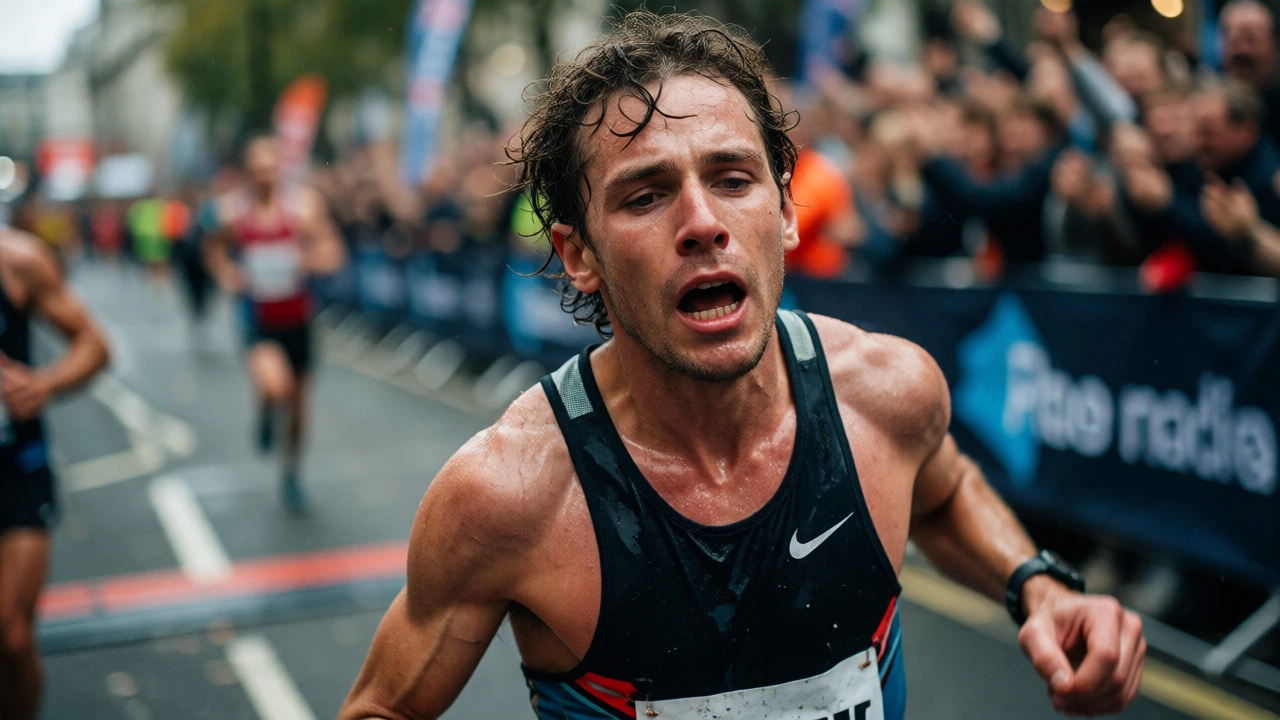
You cross the finish line. The clock reads 6:00:01. You are exhausted, your legs feel like lead, and you are covered in sweat. But then that little voice in your head whispers: "Was that actually good? Or did I just jog for six hours?"
This is one of the most common questions runners ask after their first big race. Social media makes it seem like everyone is finishing marathons in under four hours. If you took six, you might feel like you were merely participating rather than competing. But here is the truth: a 6-hour marathon is a significant achievement for many runners, especially beginners. It represents consistency, endurance, and the ability to manage pain over 26.2 miles (42.195 km). Whether it is "slow" depends entirely on who you compare yourself to and what your personal goals are.
The Reality Check: Where Does 6 Hours Rank?
Let's look at the data. According to recent statistics from Running USA and various global race results, the average marathon finishing time has hovered around 4 hours and 30 minutes for men and 5 hours for women in recent years. However, these averages include elite athletes and highly trained amateurs who skew the numbers downward.
If we look at distribution curves for major city marathons (like New York, London, or Dublin), a 6-hour finish typically places you in the bottom 20-30% of participants. This means you finished faster than roughly 1 in 5 runners. That isn't "last place." In fact, for a first-time runner with no prior athletic background, breaking the 6-hour barrier is often considered the primary milestone. It proves you have the aerobic base to sustain effort for over five hours.
| Runner Profile | Typical Goal Time | Pace per Mile | Pace per Km | Context |
|---|---|---|---|---|
| Elite Athlete | Under 2:30 | < 5:45 min/mi | < 3:35 min/km | Professional level, Olympic trials qualifier range. |
| Advanced Amateur | 3:00 - 3:30 | 6:52 - 8:00 min/mi | 4:17 - 4:58 min/km | Highly trained, consistent weekly mileage (40+ miles). |
| Intermediate Runner | 3:30 - 4:30 | 8:00 - 10:19 min/mi | 4:58 - 6:24 min/km | Regular training history, completed multiple races. |
| Beginner / First-Timer | 4:30 - 6:00+ | 10:19 - 13:44 min/mi | 6:24 - 8:32 min/km | Focusing on finishing injury-free; run/walk strategy common. |
Why 6 Hours Is Actually Impressive
Think about the physics of running a marathon. You are moving your body weight forward for approximately 36,000 steps. At a 6-hour pace, you are maintaining a speed of roughly 13:44 per mile (or 8:32 per kilometer). For someone who has never run before, sustaining this effort without stopping completely requires mental toughness and physical adaptation.
Many people underestimate the difficulty of simply *finishing*. Studies show that up to 10-15% of registered runners do not start, and another small percentage drop out mid-race due to injury or exhaustion. By crossing the line at 6 hours, you have beaten those odds. You have demonstrated discipline over months of early mornings, bad weather, and sore muscles.
Furthermore, health benefits peak significantly when you move from sedentary behavior to active participation. A 6-hour marathoner burns roughly 2,500-3,000 calories during the race alone. Your cardiovascular system has been challenged in ways that typical daily exercise does not achieve. From a health perspective, the difference between a 4-hour finish and a 6-hour finish is marginal compared to the massive leap from sitting on the couch to completing the distance.

The Run/Walk Strategy: Not Cheating, Just Smart
If your 6-hour time involved walking breaks, do not feel ashamed. The Galloway Method, developed by Dr. Jeff Galloway, advocates for integrating planned walk breaks into marathon training. This approach reduces muscle fatigue and lowers the risk of injury.
For example, running for 4 minutes and walking for 1 minute can keep your heart rate in a sustainable zone. Many runners find they finish stronger with this method than if they tried to run continuously and hit the wall at mile 20. If your goal was completion rather than competition, a run/walk strategy is often the most efficient path to a sub-6-hour finish.
Factors That Influence Your Time
Your time is not just a reflection of fitness. Several external factors play a huge role:
- Course Elevation: A flat course like Berlin allows for faster times compared to hilly courses like Boston or Big Sur. If you ran a hilly marathon in 6 hours, you might have run a flat one in 5:30.
- Weather Conditions: Heat and humidity drastically slow down paces. Running in 25°C (77°F) with high humidity feels like running in 30°C+ in dry air. Dehydration forces your heart to work harder to cool you down, slowing your pace.
- Nutrition Errors: Bonking (running out of glycogen) usually happens around mile 20. If you didn't fuel properly with gels or sports drinks every 45-60 minutes, your final few miles might have taken twice as long as your first few.
- Injury History: If you missed key weeks of training due to shin splints or knee pain, your fitness baseline is lower. Finishing safely despite incomplete training is a victory in itself.

How to Improve Beyond 6 Hours
If you want to break the 5:30 or 5:00 barrier next time, you need specific adjustments. It is not just about running more; it is about running smarter.
- Increase Long Run Distance: Aim to complete at least two training runs of 18-20 miles before race day. This builds the muscular endurance needed to hold form in the final miles.
- Add Tempo Runs: Incorporate one weekly session where you run at a "comfortably hard" pace for 20-30 minutes. This raises your lactate threshold, allowing you to run faster for longer without accumulating fatigue.
- Practice Race Pace: During your long runs, spend the last 3-5 miles running at your target marathon pace. This teaches your body and mind what that effort feels like when tired.
- Cross-Training: Add cycling or swimming to build aerobic capacity without adding impact stress to your joints. This helps increase overall volume safely.
Mental Game: Reframing Your Success
Comparison is the thief of joy. If you compare your 6-hour time to an elite Kenyan runner, you will feel inadequate. But you are not an elite professional. Compare yourself to where you started. Did you improve your pace from training runs? Did you enjoy the experience? Did you avoid serious injury?
Remember, the marathon is a personal journey. For some, finishing is the trophy. For others, beating their previous time is the goal. There is no objective "slow" label that applies universally. A 6-hour marathon is a testament to human endurance. Wear that medal with pride.
Is a 6-hour marathon good for a beginner?
Yes, absolutely. For a first-time marathoner, finishing under 6 hours is a widely accepted benchmark of success. It indicates you have built sufficient aerobic endurance and can manage the physical demands of the distance without excessive injury risk. Most coaching plans aim for a finish time between 4:30 and 6:00 for novices.
What pace do I need to run to finish in 6 hours?
To finish exactly in 6 hours, you need to maintain an average pace of 13 minutes and 44 seconds per mile, or 8 minutes and 32 seconds per kilometer. Note that this is an average; you may run slower on hills and faster on flats, but staying near this average ensures you meet the cutoff.
Do cut-off times affect my 6-hour finish?
Most major city marathons have a course closure time of 6 to 7 hours. Some stricter events close at 6 hours. Always check the specific race rules. If the cutoff is 6 hours, aiming for 5:45 gives you a buffer for congestion at the start or unexpected stops.
Can I improve my 6-hour time significantly?
Yes. With structured training focusing on long runs, tempo intervals, and strength work, many runners can shave 30-60 minutes off their initial time in subsequent marathons. Consistency in training volume and proper nutrition strategies are key drivers for improvement.
Is walking allowed in a marathon?
Yes, walking is permitted and often recommended for beginners. Using a run-walk strategy (such as the Galloway Method) can help preserve energy, reduce injury risk, and actually result in a faster overall finish time compared to trying to run continuously and hitting the wall.